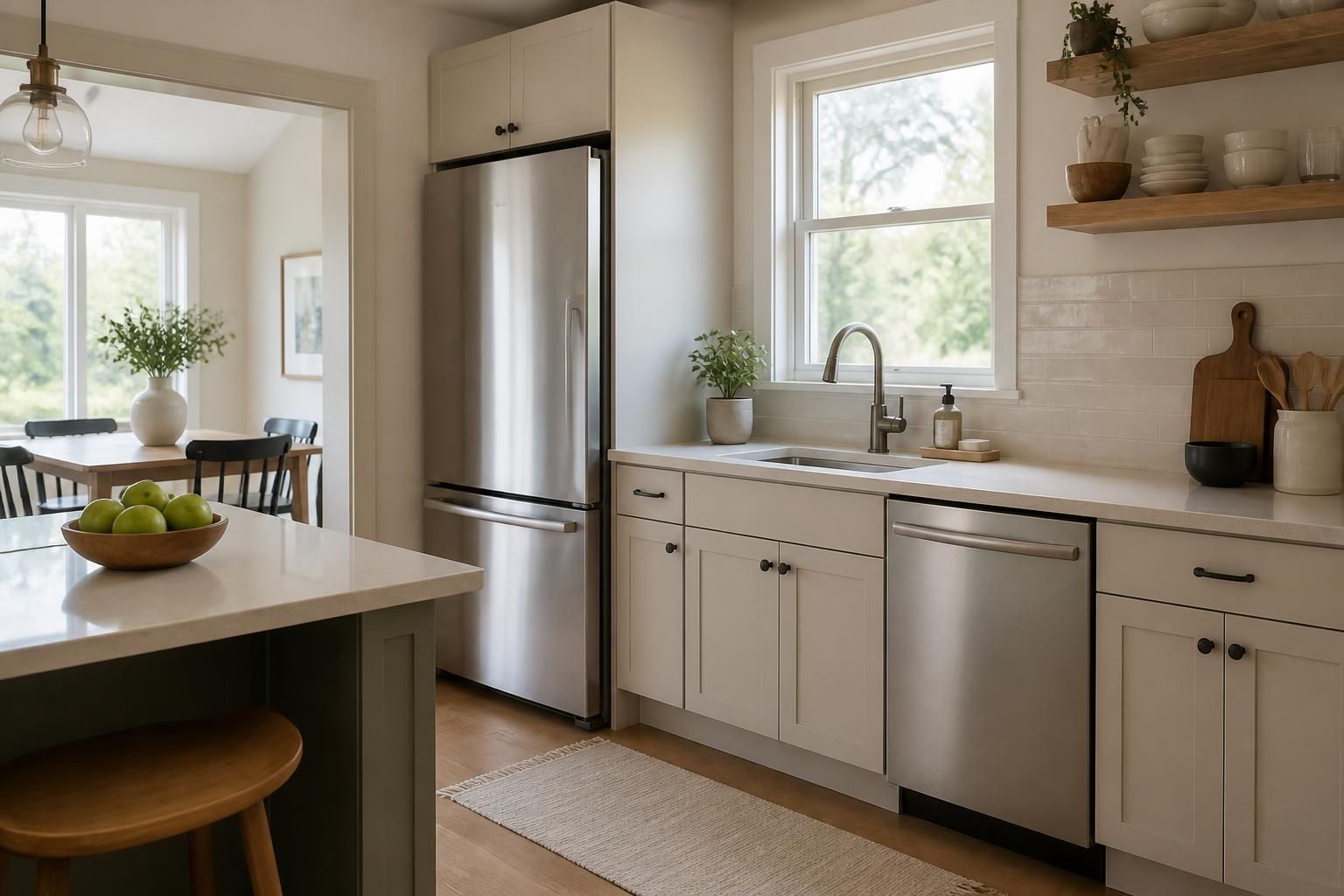
If your refrigerator is running but the food is getting warm, cold air may not be moving the way it should. A blocked vent, dirty coils, a door that does not seal, or a failed part could be the cause. You can check a few simple things, but move food that is getting warm to another cold place as soon as you can.
Check the easy things first
Open the door and look at the temperature setting. Make sure it did not get changed by accident. Check that the door shuts all the way and that no food package is holding it open. Look at the rubber seal around the door. If it is torn, loose, or covered with crumbs, warm air may be getting inside.
Next, look for food pressed against the vents inside the fridge and freezer. Cold air needs room to move. Shift items away from the vents, then shut the doors. If the fridge was just loaded with a lot of warm groceries, give it time to cool. Keep the doors closed as much as you can.
Some refrigerators have coils you can reach for cleaning. Check your owner’s manual before you try. If you need to move the fridge, ask for help. Fridges are heavy, and the water line behind one can be damaged if you pull it too far.
Pay attention to the food
A warm fridge is a food safety issue. Put meat, milk, eggs, and other foods that need to stay cold into a working fridge or a cooler with ice. A kitchen thermometer can tell you more than how the air feels. The FDA says a fridge should be at or below 40°F and a freezer at 0°F. If you do not know how long food has been warm, check current food safety guidance before you eat it.
Do not keep opening the door to see if the fridge has cooled down. Each time you open it, warm air gets in. If the freezer is also getting warm, that is useful information to share when you call for service.
What might be wrong?
A fan may not be pushing cold air through the fridge. Frost may be blocking that airflow. The door seal may be letting warm air in. Other parts that help the fridge cool may also fail. The sound of a motor running does not tell you which part is at fault.
Look for clues you can describe: heavy frost on the freezer wall, water on the floor, a clicking sound, or a fridge that runs all the time. You do not need to take panels off to find the problem. A technician can test the parts and find the cause.
What affects a repair estimate?
The estimate depends on the cause, the make and model, the part needed, and how easy that part is to reach. A door seal and an internal cooling part are different jobs. Have the model number ready if you can find it without moving the fridge. Tell the technician when you first noticed the change and whether the freezer is still cold.
Make a useful note before you call
Check both the fridge and freezer if you have a thermometer. Write down the readings and the time. Note whether the problem started after the door was left open, a power outage, or a large grocery trip. These details help show whether the fridge is still cooling a little or has stopped cooling well.
If you hear a new sound, describe it in plain words, such as clicking, buzzing, or rattling. You do not have to know the name of a part. If you see water, note where it collects. Keep your hands away from water near a plug or outlet. A clear picture of what happened can save time during the first check.
FAQs
Why is my freezer cold but my fridge warm?
Cold air may not be reaching the fridge section. A blocked vent, ice buildup, or a fan issue could be involved. A technician can test what is happening.
Should I unplug my fridge if it stops cooling?
If it is leaking near an outlet, has a burning smell, or seems unsafe, stop using it and seek help. For a cooling problem without those signs, move food to a safe cold place and call for service. Do not work on live electrical parts.
Need a closer look? See our refrigerator repair service and our Eagle Creek service area.
Call 317-428-7149 | Request an Estimate